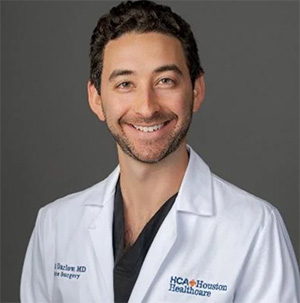
Trusted care with Matthew Darlow, MD
A leading cause of neck and back pain
A herniated disc is one of the most common causes of neck, back, and nerve-related pain. Matthew Darlow, MD specializes in diagnosing and treating herniated discs using both conservative and advanced minimally invasive techniques.
Also known as a “slipped” or “ruptured” disc, this condition occurs when the soft inner material of a spinal disc pushes through its outer layer, often irritating nearby nerves.
How common are herniated discs?
Herniated discs are extremely prevalent and affect a wide range of patients:
- Millions of Americans experience disc herniations each year
- Most common in adults between ages 30 and 60
- Frequently occur in the lumbar (lower back) and cervical (neck) spine
- A leading cause of sciatica and nerve pain
While some herniated discs cause minimal symptoms, others can lead to severe pain and functional limitations if left untreated.
How disabling can a herniated disc be?
When a herniated disc compresses a nerve, it can significantly impact daily life:
- Sharp or radiating pain in the arms or legs (sciatica)
- Numbness or tingling in extremities
- Muscle weakness affecting mobility and coordination
- Difficulty sitting, standing, or walking for extended periods
- Reduced ability to work or perform daily activities
In severe cases, untreated nerve compression can lead to long-term nerve damage.
What causes a herniated disc?
Common causes of herniated discs can include:
- Age-related disc degeneration
- Repetitive strain or heavy lifting
- Sudden injury or trauma
- Poor posture or spinal mechanics
Even simple movements can trigger symptoms when a disc is already weakened.
Symptoms of a herniated disc
Symptoms of a herniated disc can often vary by patient and severity of injury. Common reported signs and symptoms can include:
- Localized neck or back pain
- Radiating pain into the arms or legs
- Tingling or “pins and needles” sensations
- Muscle weakness
- Pain that worsens with movement, coughing, or sitting
Prompt evaluation is important to prevent worsening symptoms. If you or a loved one are experiencing the following symptoms, please consult with one of our dedicated care team members today.
Treatment options for herniated discs
Non-surgical treatment
Many patients improve without surgery. Conservative care may include:
- Physical therapy
- Anti-inflammatory medications
- Epidural steroid injections
- Activity modification
These treatments aim to reduce inflammation and relieve nerve pressure.
Minimally invasive surgical options
When symptoms persist or worsen, Matthew Darlow, MD offers advanced surgical solutions, including:
- Microdiscectomy – Removal of the herniated portion of the disc
- Artificial disc replacement – Motion-preserving alternative in select cases
These procedures are designed to relieve nerve compression while minimizing tissue disruption.
Benefits of minimally invasive treatment
Patients treated often experience:
- Rapid relief of nerve pain
- Smaller incisions and minimal scarring
- Faster recovery compared to traditional surgery
- Short outpatient procedures
- Quicker return to work and normal activities
Are you a candidate for surgery?
You may be a candidate for surgical treatment if you:
- Have persistent pain despite conservative care
- Experience significant nerve-related symptoms
- Have imaging confirming a herniated disc
- Have weakness or functional limitations
A comprehensive evaluation by Matthew Darlow, MD will determine the best approach for your condition.
Why choose Matthew Darlow, MD?
At Orthopedic Specialists of Texas, patients receive:
- Expertise in minimally invasive spine surgery
- Accurate diagnosis of nerve compression conditions
- Personalized, patient-centered treatment plans
- Focus on long-term pain relief and function
Schedule a consultation
If you are experiencing persistent neck, back, or nerve pain, a herniated disc may be the cause. Early diagnosis and treatment can help prevent long-term complications.
Schedule a consultation with Matthew Darlow, MD today.